
When people think of surfing in Portugal, the conversation usually starts and ends with the same three names: Ericeira, Peniche, Nazaré. And fair enough — those places are world-class. But the stretch of coastline around Porto? Consistently underrated, consistently delivering, and consistently uncrowded.
The northern Portuguese coast doesn’t have the fame. It doesn’t have the World Surfing Reserve title or the WSL Championship Tour events. What it has is kilometre after kilometre of sandy beach break, Atlantic swell that arrives with the reliability of a German train, pine forests that run all the way to the dunes, and lineups so empty that you’ll wonder if you missed a memo about the beach being closed.
We’ve been surfing these beaches for years — in every season, every swell direction, every tide. We’ve narrowed it down to five spots that we keep coming back to. Whether you’re a complete beginner looking for gentle whitewater or an experienced surfer searching for a peak that nobody else is on, there’s something here for you.
1. Maceda Beach — our home break
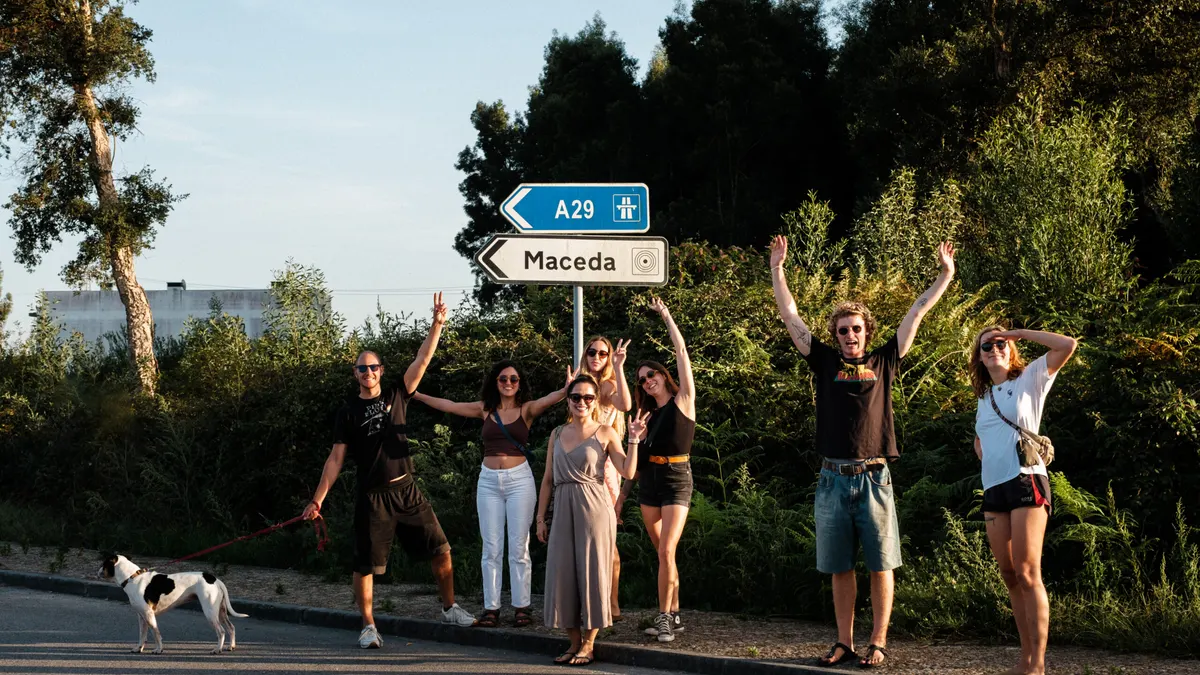
We surf this beach almost every day, and it still surprises us. Praia de São Pedro de Maceda stretches about 3.5 kilometres of white sand, backed by maritime pine forest and rolling dunes, with no buildings, no beach bars, no development of any kind. The beach is part of a protected coastal zone, and it looks exactly like it did before anyone built anything on the Portuguese coastline — wild, wide, and empty.
The wave here is a beach break that picks up swell from every direction. West, northwest, southwest — it doesn’t matter much, because the beach faces the open Atlantic and the sandbars shift through the seasons, constantly reshaping the peaks. In summer, the waves are gentle and forgiving: waist-high whitewater that’s perfect for beginners, rolling in over sand with no rocks or hazards anywhere. In autumn and winter, the same beach transforms. The sandbars tighten up, the swell increases, and Maceda produces surprisingly punchy, powerful peaks — fast lefts and rights that challenge experienced surfers and occasionally throw up sections that would look right at home in a surf video.
But the thing that makes Maceda truly special isn’t the wave quality — it’s the space. On a weekday in spring or autumn, you might have the entire beach to yourself. On a busy summer Saturday, there might be ten surfers spread across three kilometres. That ratio of wave-to-surfer is extraordinary by Portuguese standards, and it changes everything about the experience. You don’t compete. You don’t jostle. You just surf, wave after wave, with the pine forest behind you and the Atlantic horizon in front.
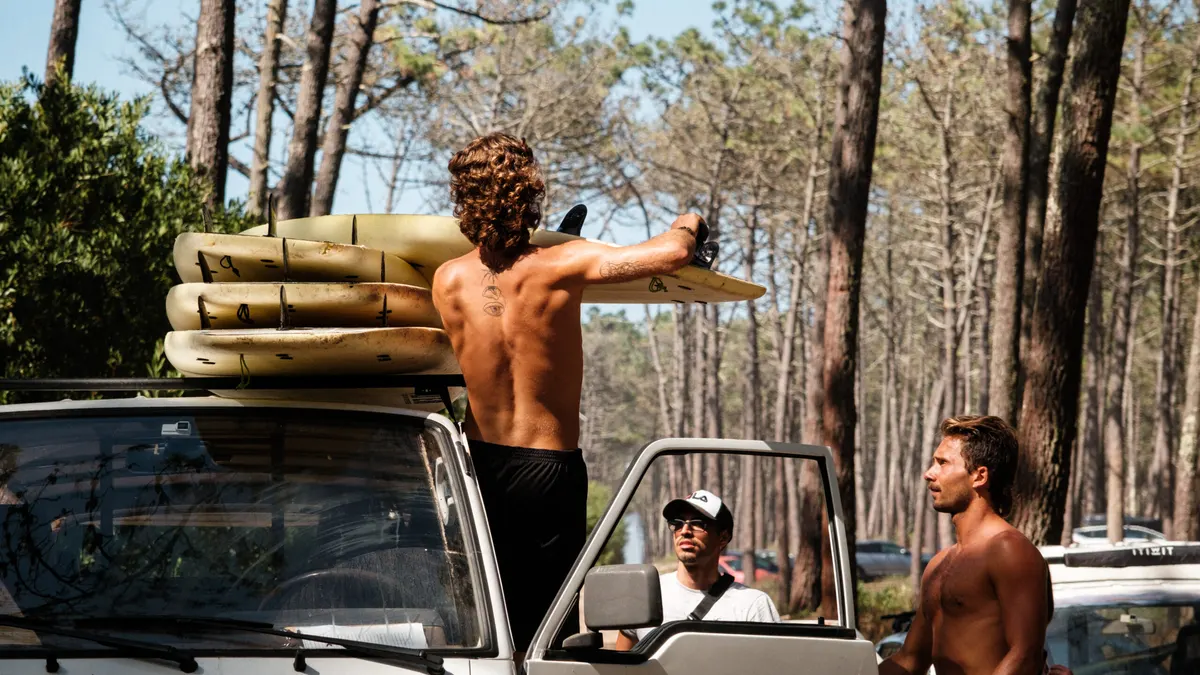
This is where we run our daily surf lessons and guiding sessions. Our instructors know every sandbar, every tide shift, every wind pocket on this beach. If you’re staying at Maceda Surf Camp, this will become your beach. And you won’t want to leave it.
Wave type: Beach break, sandy bottom, multiple shifting peaks Best conditions: Low to mid tide, small to medium swell, east or southeast wind (offshore) Level: All levels — gentle whitewater for beginners, punchy peaks for intermediates and above From camp: 5-minute drive, or a walk through the forest and dunes
2. Cortegaça — consistent and characterful
A few kilometres south of Maceda, Cortegaça is the kind of beach that rewards you for showing up. It’s known locally for being one of the most consistent spots on the northern coast — when everywhere else is flat or onshore, Cortegaça usually has something to offer.
The waves tend to be a step up from Maceda: slightly more power, slightly faster, with well-defined peaks that shift around depending on the sandbars. On a good day with a medium swell and light offshore wind, Cortegaça produces clean, peeling waves that are perfect for intermediate surfers who want to work on their turns and build speed. It’s a beach that teaches you to read the ocean — the banks change frequently, so you need to watch for a few minutes before paddling out, identify where the peaks are setting up, and position yourself accordingly.
Beyond the waves, Cortegaça has a character that most Portuguese beaches have lost. The sand is littered with traditional fishing boats — brightly painted wooden vessels that are still used for the “Arte Xávega,” a centuries-old drag-net fishing method that was once powered by oxen pulling the nets from the beach. The old “palheiros” — wooden stilt houses that fishing families used seasonally — are unique to this stretch of coast and found nowhere else in Portugal. The whole place feels like a window into a way of life that the modern coastline has mostly erased.
The beach is long enough that even when it’s busy by local standards, you can walk five minutes in either direction and find a peak that’s all yours.
Wave type: Beach break, sandy bottom, slightly more powerful than Maceda Best conditions: All tides, medium swell, easterly wind Level: Beginner to intermediate (a good step up from Maceda for progressing surfers) From camp: 5-minute drive south
3. Espinho — punchy and urban
Espinho is different from the other spots on this list. It’s a small city — not a village, not a beach town, but an actual urban centre with apartment buildings, a promenade, cafés, restaurants and a weekly Monday market that’s been running for over a century. The beach sits right against the city, which gives it a grittier, less picturesque feel than the pine-backed beaches further north.
But when the waves are on, none of that matters. Espinho’s beach break packs a punch. The waves here are faster, hollower and more powerful than Maceda or Cortegaça, with a sandy bottom that can produce surprisingly heavy barrels when the swell hits the right angle and the tide is cooperating. The local surfers — and there are quite a few — are experienced and tend to surf the better peaks, which gives you an indication of the wave quality.
Espinho also has a jetty break that produces a quality right-hander along the rocky groyne in front of the casino — it’s sometimes called the “Casino Right” and it’s arguably the most photographed wave in northern Portugal. On a clean mid-sized swell with offshore wind, it peels for a long way and offers the kind of open-face riding that you rarely find on beach breaks.
What’s great about Espinho for non-driving visitors is the train connection. The urban line from Porto stops right in the centre of town — you can hop on at Campanhã or São Bento, ride for 25 minutes, walk five minutes and be in the water. No car needed.
Not the prettiest spot on this list. But when the waves are on, Espinho delivers in a way that makes you forget about the scenery.
Wave type: Beach break (can be hollow and fast) plus jetty/reef break (“Casino Right”) Best conditions: Low tide, medium to large swell, east wind Level: Intermediate to advanced (the beach break has power; the jetty break demands experience) From camp: 20-minute drive south
4. Matosinhos — the beginner’s playground
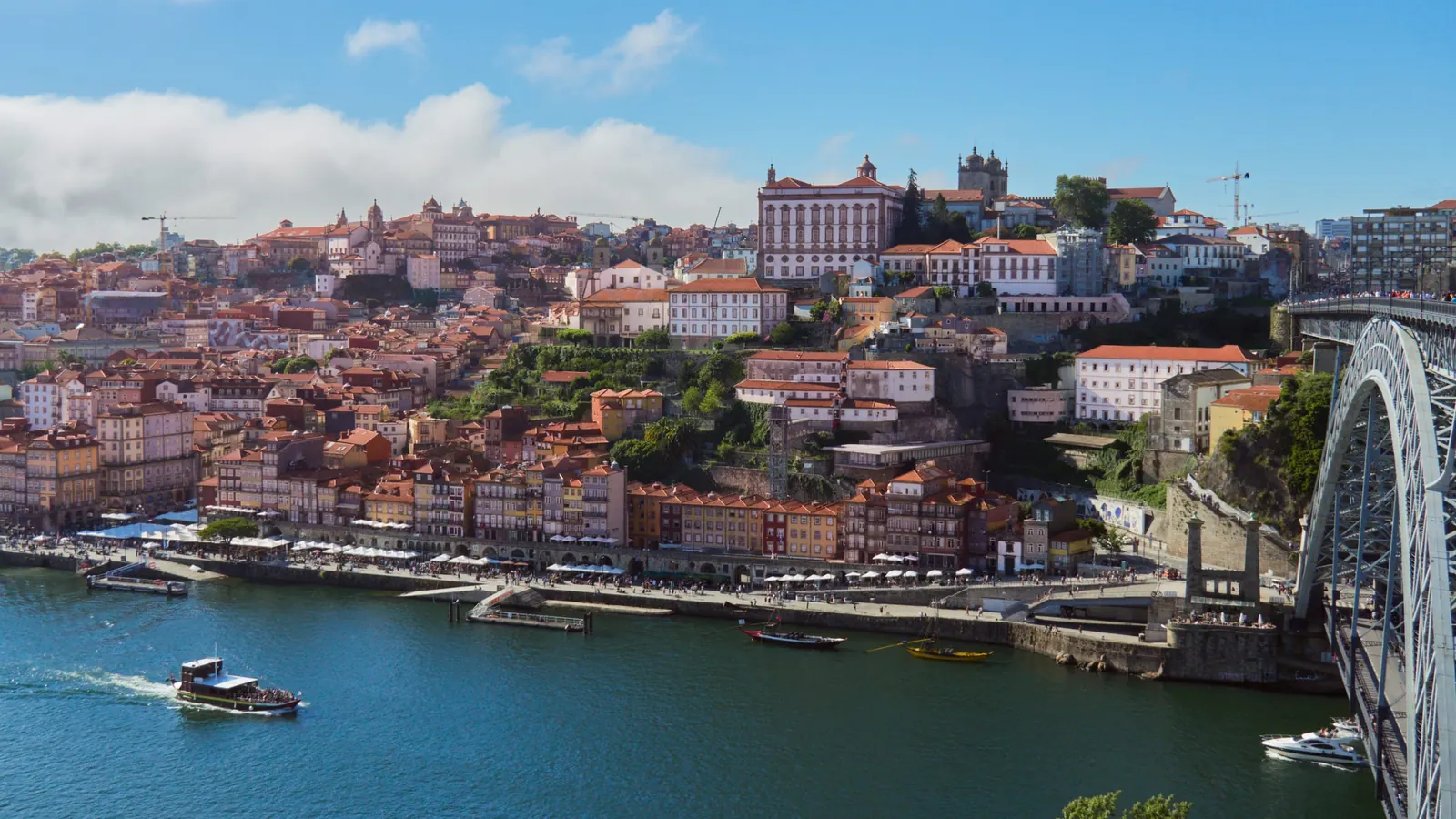
If you’re visiting Porto for a few days and want to try surfing without committing to a full trip to the coast, Matosinhos is your spot. It’s the only surf break in Portugal you can reach by subway — take the metro to Matosinhos Sul, walk five minutes, and you’re on the sand.
The beach is wide, sandy, gentle, and lined with surf schools that have been teaching beginners here for years. The waves are small and forgiving — rolling whitewater that barely reaches waist height on most days, perfect for standing up for the first time. The bottom is sand everywhere, with no rocks or hazards to worry about.
The downside is well-documented: Matosinhos gets crowded. On a sunny summer weekend, the beach is a circus — surf students from half a dozen schools paddling into each other, bodyboarders weaving between swimmers, sunbathers encroaching on the waterline, and a general energy that feels more like a theme park than a surf spot. For a one-off lesson during a Porto city break, it’s fine. For a serious multi-day learning experience, the crowds make it frustrating.
But here’s the thing nobody tells you until you’ve been: the seafood. The strip of grilled fish restaurants along Matosinhos waterfront is one of the best-kept secrets in Portuguese dining. These are simple, unpretentious places where the fish was swimming in the Atlantic that morning and is on your plate by lunchtime — grilled whole over charcoal, served with boiled potatoes, salad and olive oil. A robalo (sea bass) or dourada (sea bream) costs €10–15 with sides. The quality rivals restaurants that charge four times as much in Lisbon. After surfing at Matosinhos, eating at Matosinhos is mandatory.
Wave type: Beach break, very gentle, sandy bottom Best conditions: Any tide, small swell (it doesn’t need much) Level: Beginners (experienced surfers will be bored unless the swell is unusually large) From camp: 40-minute drive north, or train from nearby stations
5. Esmoriz — hollow and underrated
Esmoriz sits just south of Cortegaça, at the southern end of the stretch of coast we call home. It’s a quiet village — even quieter than Maceda — with a long sandy beach that, on the right day, produces some of the hollower waves in the region.
The difference between Esmoriz and the other beaches on this list is the way the sandbars set up. When the banks are good — which tends to happen more in autumn and early winter, after the first big swells have reshaped the bottom — Esmoriz produces fast, steep, barrel-prone waves that are a genuine step up from anything else on the northern coast. We’ve had sessions here where the waves were throwing properly, with clean, almond-shaped barrels peeling off the sandbar for twenty metres at a time. On the northern coast, that’s rare, and it makes Esmoriz a special spot for the days when it comes together.
It’s best suited to intermediate and advanced surfers due to the power and speed of the waves. On smaller days, confident beginners can handle it — the bottom is still sand, the beach is still wide, and the whitewater is still forgiving. But when it’s on, it demands respect.
Behind the beach sits the Barrinha de Esmoriz — a freshwater coastal lagoon that forms a nature reserve between the dunes and the village. It’s home to a variety of birdlife and wetland flora, and it’s a beautiful place to walk or cycle on a flat day (or any day when you want a break from the salt).
Wave type: Beach break, can be hollow and fast when the banks align Best conditions: Low tide, medium to large swell, southeast wind Level: Intermediate to advanced (confident beginners on small days) From camp: 10-minute drive south
How we use these spots
One of the advantages of staying at Maceda Surf Camp is the location. We’re right in the middle of this stretch of coastline, which means all five spots are within easy reach: Maceda Beach is a 5-minute drive (or a walk through the forest), Cortegaça is 5 minutes south, Esmoriz is 10 minutes, Espinho is 20 minutes, and Matosinhos is 40 minutes north.
Every morning, our instructors check the conditions — swell size and direction, wind speed and direction, tide, sandbar quality — and decide which beach is working best. Sometimes it’s an obvious call (big swell with east wind = Maceda or Cortegaça for beginners, Esmoriz or Espinho for intermediates). Other times it’s a judgment call based on subtle differences in how the banks are breaking.
The point is: you don’t have to figure this out. You show up, we tell you where we’re going, and you surf the best wave available. No wasted sessions driving between beaches, no showing up at a spot that looked good on the forecast but turns out to be blown out. Just the right wave, every time, chosen by people who’ve been reading this coastline for years.
The Porto coastline doesn’t have the fame of Ericeira or the drama of Nazaré. What it has is space. Kilometres of sand, Atlantic swell that doesn’t stop, pine forests that smell like another century, and the kind of emptiness that most surf destinations lost a long time ago. If you’ve surfed Portugal’s famous spots and want something different — or if you’re just starting out and want to learn without the crowds — this stretch of coast might be exactly what you’re looking for.