
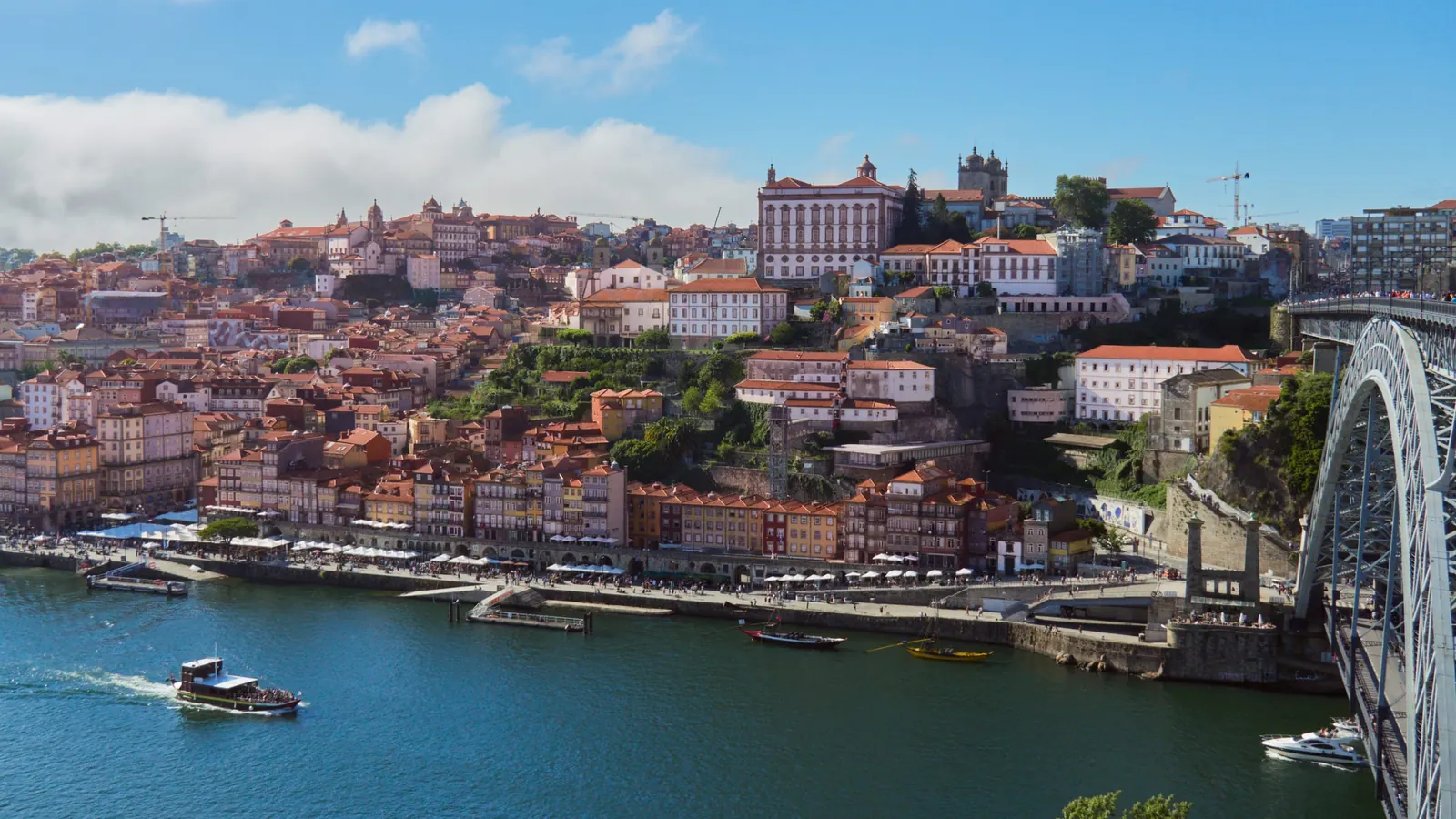
Porto is the kind of city that doesn’t try to impress you — it just does. There’s no grand reveal, no “main attraction” that everything else orbits around. Instead, it’s a slow accumulation of moments: the way the light hits the tiled façades along Rua de Santa Catarina at 6pm. The first bite of a francesinha, when you realise this isn’t just a sandwich but a religious experience wrapped in melted cheese and beer sauce. The view from the upper deck of the Dom Luís I Bridge at sunset, when the whole Douro valley turns gold and you understand why people keep coming back.
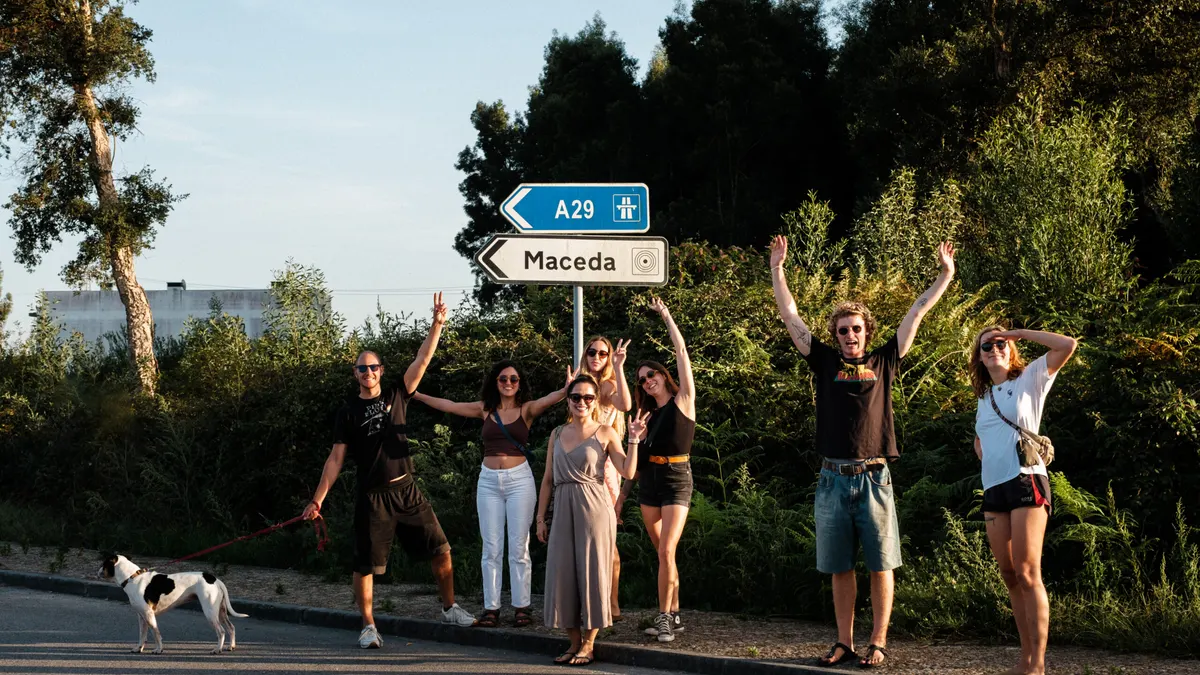
And then, forty minutes down the coast, everything changes. The city noise fades. The pine forests close in. The beaches stretch for kilometres without a soul in sight. This is Maceda — where the surf is uncrowded, the pace drops to something approaching stillness, and the only soundtrack is the Atlantic doing what it does.
Porto and Maceda are forty minutes apart but feel like different planets. Together, they make one of the best summer trips in Europe. Here’s how to make the most of both.
Walk the old town until you’re lost (then keep walking)
Porto’s historic centre is a UNESCO World Heritage Site, and the best way to experience it is without a plan. Start in the Ribeira district, the old medieval quarter that tumbles down to the Douro River in a cascade of narrow streets, crumbling façades, laundry lines and tiny bars you’d never find on a map. This is Porto at its most atmospheric — the kind of neighbourhood where every corner reveals something: a church you didn’t know existed, a tiled wall that stops you in your tracks, a café where the owner’s grandmother is probably still cooking in the back.
Cross the Dom Luís I Bridge on foot. Take the upper deck — it’s pedestrian-only, and the view is worth every step of the climb. To your left, Porto’s old town stacks up the hillside in layers of terracotta and blue tile. To your right, the port wine cellars of Vila Nova de Gaia line the opposite bank. Below, the Douro moves slow and golden. If you time it for sunset, you’ll understand why this bridge is the most photographed thing in the city.
São Bento station deserves a visit even if you’re not catching a train. The entrance hall is covered in approximately 20,000 azulejo tiles — hand-painted blue and white ceramic panels depicting scenes from Portuguese history, from medieval battles to the arrival of the first train. It took artist Jorge Colaço over eleven years to complete them. You can stand in the hall for twenty minutes, reading the walls like a book, and still notice new details.
Climb the Torre dos Clérigos if your legs can handle 240 steps. The reward is a 360-degree panorama of the city — rooftops, river, ocean on the horizon. On a clear day, you can see all the way to the coast. Day passes cost about €5, and it’s free for children under ten.
Livraria Lello, on Rua das Carmelitas, is one of the most beautiful bookshops in the world. The neo-Gothic interior — intricate woodwork, stained glass ceiling, that famous crimson staircase — is said to have inspired J.K. Rowling during her years living and teaching English in Porto (in 2020 she said she never set foot in it and didn’t even know it existed, but the resemblance to a certain fictional school is hard to ignore). There’s usually a queue, and you need an entry voucher (redeemable against a book purchase), but the interior is worth the wait.
If the Clérigos Tower is on your list, look at the Porto city passes before you buy tickets. The Highlights Pass bundles the tower with the Cathedral and the Six Bridges cruise on the Douro, and it costs less than buying the three separately. Lello isn’t in any of the passes, so its voucher is always a separate buy.
When you need a break from the crowds, head to the Serralves Foundation — a contemporary art museum set in lush gardens with walking paths, tree-top trails and an Art Deco villa. Or try the Crystal Palace Gardens (Jardins do Palácio de Cristal), perched above the river with panoramic views and the kind of quiet that lets you forget you’re in a city of 300,000 people.
Eat a francesinha (then argue about where to eat the next one)
The francesinha is Porto’s signature dish, and it’s not for the faint-hearted. Imagine a sandwich made with thick white bread, layered with cured ham, linguiça (smoked sausage), fresh sausage and steak, topped with a blanket of melted cheese, covered in a spicy sauce made from beer, tomato and port wine, and served with a mountain of fries on the side. It’s absurd. It’s excessive. It’s also one of the most satisfying things you’ll ever eat.
Every portuense (Porto local) has a favourite spot, and they’ll defend it with a passion that borders on religious fervour. Three places that consistently top the conversation:
Café Santiago, on Rua de Passos Manuel, is the old-school choice. No frills, no design concept, no avocado on anything. Just a francesinha that’s been done the same way for decades, in a room that hasn’t changed much either. Cash only. The queue on a Saturday lunchtime stretches to the door, which tells you everything.
Lado B, near the Coliseu, takes a more modern approach — better ingredients, a more considered sauce, a slightly more polished setting — without losing the soul of the dish. It’s where you go when you want a francesinha that your Instagram-conscious friend will also enjoy.
Brasão Cervejaria, near Aliados, won the “best francesinha in Porto” award in 2018 and has been riding the wave ever since. The restaurant is beautiful — a restored space with azulejo walls and high ceilings — and the francesinha lives up to the hype. It’s the priciest of the three (still under €15) and the most likely to require a reservation.
A word of advice: order one. One is a meal. Two is a dare. Eat it slowly, drink a Super Bock or a glass of vinho verde alongside it, and don’t plan anything physically demanding for the next two hours.
Drink your way through the bar scene
Porto’s nightlife punches absurdly above its weight for a city its size. The bar culture is diverse, affordable and concentrated enough that you can walk between half a dozen excellent places in a single evening.
Catraio, on Rua de Cedofeita, was Porto’s first craft beer bar and remains one of its best. The tap list rotates constantly, the backyard is perfect for summer evenings, and the crowd is a mix of locals and visitors who appreciate beer made by people who care. If you’re into craft beer at all, start here.
Letraria is another craft beer standout — a leafy garden bar with a curated Portuguese selection and the feel of a hidden oasis in the middle of the city. The kind of place where one drink turns into three without you noticing.
Torto does cocktails with a creative streak that would hold its own in London or Berlin, but at prices that would make Londoners weep. The setting is eclectic — colourful, slightly chaotic, buzzing with energy. It’s the bar you end up at on the night you didn’t plan to go out.
17° Bar, on the top floor of the Dom Henrique Hotel, offers rooftop drinks with a panoramic view of Porto. It’s not cheap by local standards, but watching the city light up while sipping something cold is worth the premium once.
Beyond the named spots, Porto’s bar culture sprawls through several neighbourhoods — Rua de Cedofeita, Rua da Galeria de Paris (the nightlife strip), the streets around Praça de Carlos Alberto. The beauty of Porto is that you can follow your nose, duck into wherever looks interesting, and you’ll rarely be disappointed.
Feast at restaurants that feel like someone’s kitchen
Porto’s restaurant scene is anchored in tradition. This isn’t a city obsessed with trends and tasting menus (though those exist too). The backbone is honest, generous, home-style Portuguese cooking, served without pretension at prices that make you wonder how they stay in business.
Adega Vila Meã serves the kind of food that Portuguese grandmothers would approve of: generous plates of grilled meats, salt cod in a dozen preparations, stews that have been simmering since morning. The menu is whatever the cook decided to make today. The portions are enormous. The setting is rustic — wooden tables, tiled walls, zero interest in aesthetics. The food needs no decoration.
O Rápido, near São Bento station, is a neighbourhood institution that’s been feeding locals for decades. The tripas à moda do Porto (tripe stew, the dish that gave Porto its nickname — “Tripeiros”) is as good here as anywhere. Fresh fish, hearty bean soups, and the kind of service where the waiter treats you like a returning neighbour even if you’ve never been.
Casa Nanda is family-run, full of character, and serves dishes with the unmistakable quality of someone who learned to cook from their mother, who learned from her mother. The grilled octopus is spectacular. The wine list is short, local and perfect.
For seafood, head to Matosinhos. The waterfront strip there is lined with restaurants that serve the freshest grilled fish in the region. The setup is simple: pick a restaurant (they’re all good), order a robalo or dourada, add a salad and bread, drink a beer, and pay €10–15 for what is genuinely one of the best meals in Portugal. No reservations, no ceremony, no nonsense.
Taste port wine at the source
No trip to Porto is complete without crossing the river to Vila Nova de Gaia, where the port wine cellars have been aging their product for centuries. The big names — Taylor’s, Sandeman, Graham’s, Cálem — all offer tours and tastings, ranging from casual walk-ins (€10–15 for a tasting of three or four wines) to premium, guided experiences with food pairings.
Taylor’s recently renovated their cellars into a modern museum experience with self-guided audio tours in thirteen languages, ending with a tasting of Chip Dry, LBV and 10-Year-Old Tawny on a terrace overlooking the river. Graham’s, perched high on the Gaia hillside, pairs port with chocolate, cheese and charcutaria in a setting that’s worth the uphill walk.
If you want to go deeper, take a day trip to the Douro Valley — the world’s oldest demarcated wine region, established in 1756. The terraced vineyards cascade down to the river in what is genuinely one of Portugal’s most beautiful landscapes. Boat cruises run from Porto and take you through the valley with stops at quintas (wine estates) for tastings and lunch. It’s a full day, and it’s extraordinary.
Even if you don’t love port wine (it’s an acquired taste — the tawny ports tend to win over sceptics faster than the rubies), the experience of standing in a centuries-old cellar, surrounded by barrels that have been quietly aging while the world outside changed beyond recognition, is worth the visit.
Hear Fado live in Porto
Fado has been on UNESCO’s list of Intangible Cultural Heritage since 2011, and in Porto you can hear it live every night: a singer accompanied by a Portuguese guitar and a classical guitar.
If it’s your first time, pick a concert rather than a Fado dinner. A concert lasts about an hour, there’s no food, the rooms are small and most singers perform without a microphone. Concerts start between 5:30 and 9:15pm, so you can go from the port cellars in Gaia to a concert and still have dinner afterwards. Tickets cost €14–21, often with a glass of port included.
If you want to know everything about Fado in the city, from where to go to when to clap, read the complete guide to Fado in Porto that Ricardo Pons, a Fado expert from Porto, wrote for Fado Magazine.
Learn to surf forty minutes from the city
This is the part where we mention that one of the best surf experiences in Portugal is just a short train ride from Porto.
Maceda sits 40 minutes south of the city, on a 12-kilometre stretch of wild, uncrowded beach backed by pine forest and dunes. The waves are consistent year-round, the beach is sandy and forgiving, and on most days you’ll surf with more space than you know what to do with.
At Maceda Surf Camp, we offer daily surf lessons for all levels, yoga sessions in a forest shala, and a back-to-nature experience that makes a perfect counterpoint to Porto’s urban energy. You can take the train from Campanhã station to Carvalheira-Maceda (32 minutes, a few euros), rent a car, or book a transfer. Either way, you’re in the water quickly.
Many of our guests combine a few days in Porto with a week at camp. The train connection makes it seamless — city culture one day, empty waves and pine forests the next. It’s the kind of combination that makes people say “I had no idea you could do both in one trip.”
Read more about the surf spots near Porto in our guide: Surfing Around Porto — Our 5 Favourite Spots.
Porto rewards the curious. It’s not a city that reveals everything on the first visit — it layers, unfolds, surprises. The francesinha you didn’t expect to love. The bar you found by accident. The sunset from the bridge that made you stop and stand there for ten minutes, not taking a photo, just looking.
And when the city energy reaches its limit — when you’ve eaten too well, drunk too much port, walked too many cobblestone streets — Maceda is forty minutes south, ready to slow everything down. Empty waves. Pine-scented air. The sound of the Atlantic pulling you to sleep.
That’s the Porto summer. Culture and coast. Noise and silence. Both, in the same trip.